Minimum Area Rectangle
LeetCode 976 | Difficulty: Medium
MediumProblem Description
You are given an array of points in the X-Y plane points where points[i] = [x~i~, y~i~].
Return the minimum area of a rectangle formed from these points, with sides parallel to the X and Y axes. If there is not any such rectangle, return 0.
Example 1:
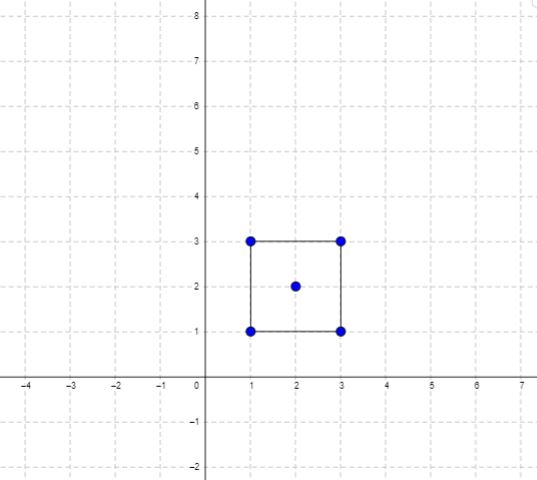
Input: points = [[1,1],[1,3],[3,1],[3,3],[2,2]]
Output: 4
Example 2:
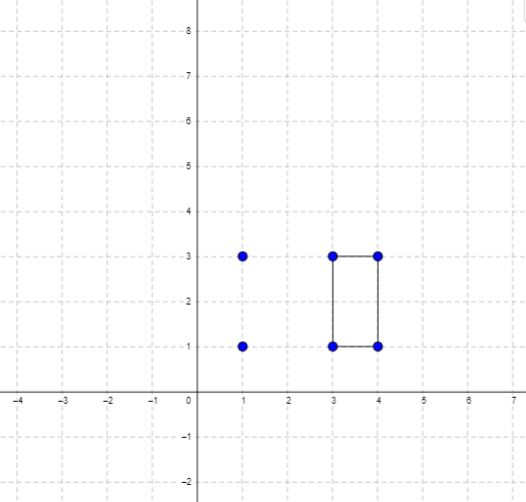
Input: points = [[1,1],[1,3],[3,1],[3,3],[4,1],[4,3]]
Output: 2
Constraints:
-
1 <= points.length <= 500 -
points[i].length == 2 -
0 <= x~i~, y~i~ <= 4 * 10^4 -
All the given points are unique.
Topics: Array, Hash Table, Math, Geometry, Sorting
Approach
Hash Map
Use a hash map for O(1) average lookups. Store seen values, frequencies, or indices. The key question: what should I store as key, and what as value?
Need fast lookups, counting frequencies, finding complements/pairs.
Mathematical
Look for mathematical patterns or formulas. Consider: modular arithmetic, GCD/LCM, prime factorization, combinatorics, or geometric properties.
Problems with clear mathematical structure, counting, number properties.
Sorting
Sort the input to bring related elements together or enable binary search. Consider: does sorting preserve the answer? What property does sorting give us?
Grouping, finding closest pairs, interval problems, enabling two-pointer or binary search.
Solutions
Solution 1: C# (Best: 477 ms)
| Metric | Value |
|---|---|
| Runtime | 477 ms |
| Memory | 39.2 MB |
| Date | 2022-01-20 |
public class Solution {
    public int MinAreaRect(int[][] points) {
        	int minArea = Int32.MaxValue;
	var coOrds = new Dictionary<int, List<int>>();
	foreach (var point in points)
	{
		if (!coOrds.ContainsKey(point[0]))
		{
			coOrds[point[0]] = new List<int>();
			coOrds[point[0]].Add(point[1]);
		}
		else
		{
			coOrds[point[0]].Add(point[1]);
		}
	}

	for (int i = 0; i < points.Length; i++)
	{
		for (int j = 0; j < i; j++)
		{
			int x1 = points[i][0];
			int y1 = points[i][1];
			int x2 = points[j][0];
			int y2 = points[j][1];

			if (x1 == x2 || y1 == y2)
				continue;


if (coOrds[x1].Contains(y2) && coOrds[x2].Contains(y1))
				{
					minArea = Math.Min(minArea, Math.Abs((x1 - x2) * (y1 - y2)));
				}

		}
	}
	return minArea != Int32.MaxValue ? minArea : 0;
    }
}
📜 2 more C# submission(s)
Submission (2021-11-24) — 519 ms, 38.6 MB
public class Solution {
    public int MinAreaRect(int[][] points) {
        	int minArea = Int32.MaxValue;
	var coOrds = new Dictionary<int, List<int>>();
	foreach (var point in points)
	{
		if (!coOrds.ContainsKey(point[0]))
		{
			coOrds[point[0]] = new List<int>();
			coOrds[point[0]].Add(point[1]);
		}
		else
		{
			coOrds[point[0]].Add(point[1]);
		}
	}

	for (int i = 0; i < points.Length; i++)
	{
		for (int j = 0; j < i; j++)
		{
			int x1 = points[i][0];
			int y1 = points[i][1];
			int x2 = points[j][0];
			int y2 = points[j][1];

			if (x1 == x2 || y1 == y2)
				continue;


			if (coOrds.ContainsKey(x1) && coOrds.ContainsKey(x2))
			{
				if (coOrds[x1].Contains(y2) && coOrds[x2].Contains(y1))
				{
					minArea = Math.Min(minArea, Math.Abs((x1 - x2) * (y1 - y2)));
				}
			}
		}
	}
	return minArea != Int32.MaxValue ? minArea : 0;
    }
}
Submission (2021-11-24) — 548 ms, 41.4 MB
public class Solution {
    public int MinAreaRect(int[][] points) {
        	int minArea = Int32.MaxValue;
	var coOrds = new Dictionary<int, List<int>> ();
	foreach (var point in points)
	{
		if (!coOrds.ContainsKey(point[0]))
		{
			coOrds[point[0]] = new List<int>();
			coOrds[point[0]].Add(point[1]);
		}
		else
		{
			coOrds[point[0]].Add(point[1]);
		}
	}

	foreach (var p1 in points)
	{
		foreach (var p2 in points)
		{
			int x1 = p1[0];
			int y1 = p1[1];
            int x2 = p2[0];
			int y2 = p2[1];

			if(x1 == x2 || y1 == y2)
			continue;


			if (coOrds.ContainsKey(x1) && coOrds.ContainsKey(x2))
			{
				if (coOrds[x1].Contains(y2) && coOrds[x2].Contains(y1))
				{
					minArea = Math.Min(minArea, Math.Abs((x1 - x2) * (y1 - y2)));
				}
			}
		}


	}
        return minArea != Int32.MaxValue ? minArea : 0;
    }
}
Complexity Analysis
| Approach | Time | Space |
|---|---|---|
| Sort + Process | ||
| Hash Map |
Interview Tips
- Discuss the brute force approach first, then optimize. Explain your thought process.
- Hash map gives O(1) lookup — think about what to use as key vs value.